Yoga as a form of an Anti-Aging Exercise
bookmark this at :: del.icio.us
:: Digg it
|
|
May 31, 2007 |
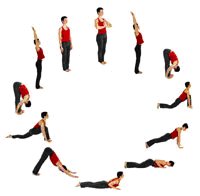 From all the factors talked about yesterday, we must have realized by now just how important it is to engage in exercise for anti-aging purposes. We have also learned to include the three components of a total anti-aging exercise program which were Flexibility, Strength and Cardiovascular training. But what if I told you Yoga: Poses, Abdominal and Breathing Exercises could give you all of those? Well it can-when practiced correctly. Moreover, when combined with other forms of body-weight exercises such as Pilates, Hindu-Push Ups (both being direct descendants of Yoga) and Calisthenics, you are definitely bound to see a drastic delay in the whole aging process. From all the factors talked about yesterday, we must have realized by now just how important it is to engage in exercise for anti-aging purposes. We have also learned to include the three components of a total anti-aging exercise program which were Flexibility, Strength and Cardiovascular training. But what if I told you Yoga: Poses, Abdominal and Breathing Exercises could give you all of those? Well it can-when practiced correctly. Moreover, when combined with other forms of body-weight exercises such as Pilates, Hindu-Push Ups (both being direct descendants of Yoga) and Calisthenics, you are definitely bound to see a drastic delay in the whole aging process.
The Sun Exercises

Through routine exercise, we will feel happier, energetic, and confident. It also increases our bone density and muscle mass which can make our bodies look 15-20 years younger. However, some yoga poses such as the Sun Salutations, The Shoulder Stand and the Abdominal Lift Exercises in Yoga have been known for centuries to delay aging naturally (of course in an adherence to a proper diet). Though any vigorous exercise may suffice, Yoga stands unmatched as an anti-aging exercise of physical culture…Hey, have you seen Madonna or Sting on TV lately?
The Shoulderstand
Tomorrow the need for vitamins to go with your anti-aging exercise program
Labels: anti-aging, exercise, yoga |
posted by Maggie @ 1:28 pm   |
|
|
|
Assessing the three Components of Anti-Aging Exercises
bookmark this at :: del.icio.us
:: Digg it
|
|
May 30, 2007 |
Flexibility Training Program

Flexibility training is the foundation of any anti-aging exercise program because it increases blood flow to the muscle. It also warms up the main muscles of our body and allows our body to be more pliable and less prone to injury as a result of exercise or the daily demands that we may put on our bodies.
As a result of misinformation, most people go straight into an anti-aging exercise program without warming-up the body and stretching the muscles. Proper Stretching should only take 5-10 minutes a day. Considering the short length of time needed, it will be safe to say one should not (and need not) embark on any aerobic program or weight-training program without first doing stretching exercises for your key muscle groups.
Cardiovascular Training Program:

Cardiovascular (aerobic) exercise is an important part of the anti-aging exercise program. It is one of the greatest anti-aging bullets available. The list of benefits from aerobic exercise includes a gain of muscle mass and strength, loss of fat, increased energy, increased sense of well being and a decrease in anxiety and depression.
In addition, aerobic exercise also increases the level of HDL-cholesterol, lowers blood pressure, improves the immune system and helps protect the body against a host of chronic diseases.
Research has shown that cardiovascular exercise increases longevity. Men who spend at least 2,000 kilocalories per week doing moderate exercise such as cycling, tennis, swimming, jogging or brisk walking, lowered their overall death rate by 25 to 33 percent and decreased their risk of coronary artery disease by an astounding 41 percent when compared to their more inactive fellow counterparts.
Cardiovascular exercise as a form of an anti-aging exercise program benefits any age group. However, it should be customized to fit the particular needs of each person.
It must be noted that any aerobic activity stimulates deep breathing by using large muscle groups in a continuous and rhythmical manner. Exercises such as jogging, running, walking, bicycling, hiking, dancing and swimming are such activities.
Strength Training Program

Several anti-aging experts agree that strength training should be an integral part of any anti-aging exercise program. The reason is simple: After the age of 30, our body mass begins to decrease by 6-10 % with each decade. This means by age 70, we have only about 50% of our muscle strength left!
Needless to say, decrease in body strength leads to decrease in function, less energy, less balance, and increase in accident rate. Therefore, increasing strength through your anti-aging exercise program should receive as much attention as the other components of anti-aging exercises listed above.
Strength training, as a form of an anti-aging exercise, activates your pituitary gland to release growth hormone (growth hormone is a key anti-aging hormone).
Therefore working together with the cardiovascular component of anti-aging exercise training, one is bound to see an increased level of anti-aging hormones released into the blood stream which of course lends to a successful delay of the overall aging process.
Read about Yoga as a form of Anti-Aging Exercise tomorrowLabels: anti-aging, exercise |
| posted by Maggie @ 1:25 pm |
|
|
|
Anti-Aging Exercises
bookmark this at :: del.icio.us
:: Digg it
|
|
May 29, 2007 |
Although we all aspire for optimal health and fitness, one factor that we  must accept as the inevitable course of nature is the aging process. However aging can be delayed or even halted by engaging in exercise: Anti-Aging Exercises. By now we all know one essential component of being healthy is proper exercise. Moreover, research has shown exercises do help all the more to enhance the anti-aging process. must accept as the inevitable course of nature is the aging process. However aging can be delayed or even halted by engaging in exercise: Anti-Aging Exercises. By now we all know one essential component of being healthy is proper exercise. Moreover, research has shown exercises do help all the more to enhance the anti-aging process.
If there is a magic pill for anti-aging, there is no doubt among leading researchers that anti-aging exercise is it. Nothing comes closer to achieving anti-aging effects in our body than exercise. From an anti-aging perspective, the real question is not whether to exercise, but more importantly, what kind of exercise, how much, and how often.
 This is where the secret is. This is where the secret is.
Now, Anti-aging exercises consist of 3 separate components:
1. Flexibility Training
2. Cardiovascular Training
3. Strength Training
Each of these components is equally important. Just as much as it is well known that aerobics is good for the heart, it should also be noted that flexibility and strength training contribute as much to anti-aging exercises as cardiovascular (aerobics) training does.

It will be sufficient to say at this point that any anti-aging exercise program must be customized to meet your personal needs, based on your current physical conditions. As well, the program must include, in a balanced fashion, all three components mentioned above.
Tomorrow we will look at each of the three components in detail.
Labels: anti-aging, exercise |
| posted by Maggie @ 1:20 pm |
|
|
|
Cardiovascular Disease
bookmark this at :: del.icio.us
:: Digg it
|
|
May 28, 2007 |
Folic Acid, Vitamin B6 and Vitamin B12
Cardiovascular disease, the number-one killer of men and women, claims the lives of almost 40% of the more than 2.4 million Americans who die each year. Today, about 64 million Americans have some form of cardiovascular disease.
Homocysteine a nonessential, sulfur-containing amino acid, is an independent marker of risk for the development of cardiovascular disease. Back in 1981, we first recommended that members reduce homocysteine levels by taking folic acid, vitamin B6, and vitamin B12.
Some researchers consider homocysteine as important a cardiovascular risk factor as low-density lipoprotein (LDL). Homocysteine can make blood clot more easily than normal, increasing the risk of both heart attack and death by heart attack.
Inadequate levels of folic acid and vitamins B6 and B12 can lead to increased homocysteine levels. 
Folic Acid Sources
Whole grain breads
Fortified cereals
Dried peas
Dried beans
Leafy vegetables
Fruit
 Vitamin B6 is found in a wide variety of foods. Vitamin B6 is found in a wide variety of foods.
Fortified breakfast cereals
Fish including salmon and tuna fish
Meats such as pork and chicken
Bananas
Beans
Peanut butter
Many vegetables

Sources of Vitamin B12
The only reliable unfortified sources of vitamin B12 are meat, dairy products and eggs.
The current nutritional consensus is that no plant foods can be relied on as a safe source of vitamin B12.Labels: Cardiovascular disease |
| posted by Maggie @ 7:29 pm |
|
|
|
Another Ten Free Tips on Weight Loss for the Over Forties
bookmark this at :: del.icio.us
:: Digg it
|
|
May 26, 2007 |
Weight loss over forty needs commitment and dedication. .jpg) This is the second in our series of free weight loss tips to give you practical help and support in your battle with the flab. This is the second in our series of free weight loss tips to give you practical help and support in your battle with the flab.
The slowing of metabolic processes as you get older can make it difficult to reach and maintain a target weight and there's nothing more aging, nor more unheathly, than flab in the wrong places.
To achieve your weight loss goal you'll need a bit of help. Expending more energy than you take in may sound simple, but it's a different matter in practice.
Here's another ten weight loss tips to help you along the way:
1. Avoid anything with trans fats (hydrogenated fat) and high fructose corn syrup (HFCS). You'll see these things in a lot of commonly available foods. They contribute to weight gain - as well as many other health problems. Steer clear and pick up a healthy option - fresh fruit, vegetables, salad and lean meat.
2. Comparisons are odious. Your body is different from anyone else’s and will lose and gain weight in different ways. Two people following the same program won’t have the same results, so don’t get discouraged if you can’t lose weight as easily as a friend.
3. Remember - the sexes lose weight differently. If you’re dieting with your male partner, he may (annoyingly) shed pounds more quickly. This is because men generally drop weight more easily than women, who are biologically programmed to retain fat - particularly around areas like hips and thighs.
4. Avoid diet pills, crash diets, and gimmicks. There’s no such thing as a magic solution. These commercial products and plans are out to get your money. They only work when combined with a proper diet and exercise – which are what help you to lose weight anyway.
5. Up your intake of vitamins. A natural multi-vitamin and mineral supplement can improve your health overall and help you to lose weight a little faster.
6. Target your ideal weight. Find out what your ideal weight is (based on your BMI) and target that as your end goal. The ideal weight is the one where you will be the healthiest, and it’s important not to try to drop below it, thinking that thinner is better.
7. Go 'cold turkey' on fast food. It’s bad for you, and it comes in portions that will make you gain, rather than drop pounds. Convenience is not worth the extra fat it makes you put on. Make a lifetime lifestyle switch to healthier fresher food and you'll look younger and feel fitter almost instantly.
8. Don't develop an unhealthy relationship with the bathroom scales. Weigh yourself regularly but don't obsess. Hiding from the scale will make you want to ignore the problem. Remember that your weight fluctuates throughout the day and that your weight on a given day might not be related to your current food consumption. Keep your eye on the trend, not the daily number.
9. Think long term. Remind yourself of your goal. If you’re tempted to put another dollop of mayonnaise on your sandwich, be sure to think first about whether it will sabotage your diet changes. Priorities are vital in weight loss.
10. Exercise regularly. Without activity, you might lose muscle before you lose fat, which is a disastrous situation. Muscle mass raises your metabolic rate and helps you burn fat - if you lose muscle your metabolic rate will plummet and it will be even more difficult to achieve your weight loss goals.
So - keep going - progress will be slow but this is a good thing. Crash dieting will guarantee a return of the pounds very quickly. Don't forget your weight loss goal is in sight - follow our series of tips and you'll soon look younger and feel fitter than you have in years!Labels: anti-aging, weight loss |
| posted by Maggie @ 12:43 pm |
|
|
|
More meditation ideas
bookmark this at :: del.icio.us
:: Digg it
|
|
May 25, 2007 |
 Soothing your spirit: Soothing your spirit:
Reflection on meaning and purpose in your life
Do you find that you feel more hopeful after attending a worship service? Do you enjoy taking time to read a daily meditation? Many people find that taking the time to sing, pray, read and reflect on the meaning and purpose of life with like-minded people helps them face life's challenges.
Consider these examples:

Engage in prayer. The best known and most widely practiced example of meditation is prayer. Spoken and written prayers are found in most faith traditions. You can pray using your own words or read prayers written by others.
Check the self-help or 12-step-recovery section of your local bookstore for examples.
Talk with your rabbi, priest, pastor or other spiritual leader about resources.
You may also consider joining a prayer group.
Read or listen and take time to reflect. Many people report that they benefit from reading poems or sacred texts silently or aloud, and taking a few moments to quietly reflect on the meaning that the words bring to mind.
You can listen to sacred music, spoken words or any music you find relaxing or inspiring.
You may want to write your reflections in a journal or discuss them with a friend or spiritual leader.
Focus your attention on love and gratitude. In this type of meditation, you focus your attention on a sacred object or being, weaving feelings of love and gratitude into your thoughts. You can also close your eyes and use your imagination or gaze at representations of the object. The adoration of the Holy Eucharist is an example found in Roman Catholicism.
Getting started
Meditation can calm your mind, relax your body and soothe your spirit. If you're interested in meditation, consider these suggestions as you get started:
* Select a meditation technique that fits your lifestyle and belief system. Many people build meditation into their daily routine. For example, you can start your day with a prayer or take a 15-minute walking meditation break in the afternoon. At the end of your workday, you may find inner peace by attending a yoga or tai chi class at your community center.
* Set aside some time. Start with 5-minute meditation sessions once or twice a day and work up to 20 minutes each time. Unless you have an excellent innate sense of time, keep a clock nearby and glance at it occasionally, or set an alarm that's not jarring when it goes off.

* Keep trying. Be kind to yourself as you get started. If you're meditating to calm your mind and your attention wanders, slowly return to the object, sensation or movement you're focusing on. You can use an image to bring yourself back to your focus if you'd like.
Try this: Picture balloons floating away with your thoughts, or imagine your thoughts as pigeons and mentally clap your hands to get them to fly away. Apply this technique to your worries.
* Make meditation part of your life. Many people prefer to start and end their day with a period of meditation. Others prefer to take meditation breaks during the day. Experiment and you'll likely find out what works best for you.
Meditation is simple and inexpensive. It requires only your time and effort, and the risks are minimal. If you're interested in stress reduction, give meditation a try. Labels: anti-aging, meditation, stress reduction |
| posted by Maggie @ 8:00 am |
|
|
|
Types of Meditation
bookmark this at :: del.icio.us
:: Digg it
|
|
May 24, 2007 |
Yesterday we had a general look at meditation, and how it may help with certain medical conditions. Today we will look at some different types of meditation. Concentration meditation: Calming your mind

Concentration meditation involves focusing your attention on a single object. Objects of meditation can include your breathing, an image you visualize in your mind or a real image you look at, such as a candle flame or sacred icon. One purpose of concentration meditation is to help you focus your attention and concentrate. If you have a lot on your mind and find you're having trouble concentrating in your everyday life, take a break to meditate and return to your project refreshed. Here are some examples. Breathe deeply. If you're a beginner, consider starting with this technique. Breathing is a natural function that you won't have to consciously learn. You simply pay attention to your breathing — how it feels when air enters or leaves your nostrils. Don't follow it down to your lungs. When you feel your attention wander, gently return your focus to your breathing. Scan your body. When using this technique, you'll focus your attention on sensations, such as pain, tension, warmth or relaxation in different parts of your body. Combine body scanning with breathing exercises and imagine breathing heat or relaxation into and out of different parts of your body. Repeat a sacred name or phrase. A mantra is the name of a sacred deity or a sacred phrase that you repeat silently or aloud. You can create your own mantra, if you'd like. Mantras are the building blocks of transcendental meditation. Examples of religious mantras include a Jesus prayer in the Christian tradition, the holy name of God in Judaism, or the om mantra of Tibetan Buddhism.  Exercise your imagination. Exercise your imagination.
A related practice is guided imagery, in which someone's voice, whether taped or live, directs you through a visualization exercise. Once you reach a state of deep relaxation, most likely through meditation, you create a visual image of whatever the person directing the exercise suggests. Perhaps it's a peaceful place, such as a garden, where you feel calm and safe. Meditation in motion:A conscious blend of body and mind Meditation that includes movement can be spontaneous and free-form or involve highly structured, choreographed, repetitive patterns. This type of meditation may be particularly helpful if you find it hard to sit still. The following are examples: Yoga. Yoga involves a series of postures, during which you pay special attention to your breathing — exhaling during certain movements and inhaling with others. You can approach yoga as a way to promote physical flexibility, strength and endurance or as a way to enhance your spirituality.  Tai chi Tai chi. Tai chi involves gentle, deliberate circular movements combined with deep breathing. As you concentrate on the motions of your body, you develop a feeling of peace and tranquility. Qi gong. This technique arises from ancient China. Similar to yoga and tai chi, it integrates physical postures, breathing techniques and focused attention. Walking meditation. Combining a walk with meditation is an efficient and healthy way to relax. You can use this technique anywhere — in a tranquil forest, on a city sidewalk or even inside a building where you work. When you use this method, slow down the pace of walking so that you can focus on each movement of your legs or feet. Don't focus on a particular destination. Concentrate on your legs and feet, repeating action words such as "lifting," "moving" and "placing" as you lift each foot, move your leg forward and place your foot on the ground. You can substitute other words if you like. Some people prefer to signal the beginning and end of a walking meditation with a ritual, such as the ringing of a bell, a ceremonial bow, silent prayer or spoken words of thankfulness.  Sufi walking or dancing Sufi walking or dancing. A form of moving meditation that developed in medieval Islam, you'll walk or dance in a rhythmic fashion while chanting. From the Islamic perspective, the intent of the chant is to focus your mind on a specific quality of God, or Allah. If you're Muslim and want to focus on strength and courage, you could walk or dance with forceful steps, arms swinging, and chant "Allah akbar," meaning "God is great." You can merge this meditation technique with any faith tradition and focus on any sacred object or deity. If you don't consider yourself spiritual or religious, you could focus on an aspect of a phenomenon, such as birth or nature, and chant words or phrases symbolic of that phenomenon. Labels: anti-aging, meditation |
| posted by Maggie @ 7:17 am |
|
|
|
Meditation techniques
bookmark this at :: del.icio.us
:: Digg it
|
|
May 23, 2007 |
 Meditation techniques have been practiced for thousands of years. Originally the goal was to help individuals deepen their understanding of the sacred and mystical forces of life. And for many, meditation continues to be a spiritual and religious practice. Variations of meditative practice are found in all of the world's religions. Meditation techniques have been practiced for thousands of years. Originally the goal was to help individuals deepen their understanding of the sacred and mystical forces of life. And for many, meditation continues to be a spiritual and religious practice. Variations of meditative practice are found in all of the world's religions.
But for a growing number of people, meditation is about stress reduction. So how do you meditate and where do you find the inspiration to quiet your mind? Follow these steps to explore different types of meditation.
What is meditation?
Meditation is a complementary and alternative medicine (CAM) practice that falls under the category of mind-body techniques. These types of therapies strengthen communication between your body and your mind. Other types of mind-body techniques include support groups, hypnosis, biofeedback, and creative outlets such as art, music or dance therapy.
While there are different paths to meditation, in general, when you're meditating, you're concentrating. The focus of your concentration can be anything — an object, a sound or even your own breathing. The goal of meditation is to focus on the moment, clearing away your worries
Can meditation help you achieve stress reduction?

Meditation is used by people who are perfectly healthy as a means of stress reduction. But if you have a medical condition that's worsened by stress, you might find the practice valuable in reducing the stress-related effects of allergies, asthma, chronic pain and arthritis, among others.
Can meditation help relieve the symptoms of other medical conditions?
Meditation isn't typically used in place of traditional therapies, such as medications your doctor prescribes. Instead, you might use meditation to supplement your other treatments. Medical research into meditation is limited, and the validity of some studies has been questioned. Keeping that in mind, some research shows that meditation may be beneficial for certain conditions when used along with medications or other interventions recommended by your doctor, including:

* Anxiety
* Depression
* Stress
* High blood pressure
* Heart disease
What are the different types of meditation?
Several different forms of meditation exist. Meditation can involve movement or complete stillness.
Tomorrow we will look at some different types of meditation.
Labels: anti-aging, meditation, stress reduction |
| posted by Maggie @ 7:11 am |
|
|
|
Meditation Benefits Abound for Schoolchildren, Study Finds
bookmark this at :: del.icio.us
:: Digg it
|
|
May 22, 2007 |

A Medical College of Georgia pilot study using meditation to help lower blood pressure in teens was so successful that the project has been extended to five high schools and a middle school.
Dr. Vernon Barnes, a physiologist at the Georgia Prevention Institute with over 30 years of experience in teaching and applying meditation techniques, conducted the pilot five years ago, teaching meditation to students with high-normal blood pressure at a Richmond County high school.
The results, published in a 1999 edition of Psychosomatic Medicine, cited lower blood pressure and other improvements among participants. The success spurred the GPI to expand the project to include 156 high school students and 80 middle school students in Richmond County. The study is funded by the American Heart Association and the National Institutes of Health.
For the expanded study, all students in the six participating schools were tested for high-normal blood pressure. Half of those with the condition--a leading risk factor for hypertension--were invited to join in daily 10- to 15-minute meditation classes. The other half, a control group, received health education to lower blood pressure but no meditation training. The students who received meditation training also were instructed to meditate at home each evening.
“Blood pressure typically goes up with age, and the blood pressure of the control group did go up,” Dr. Barnes said. “The blood pressure of the meditation group went down.”
The blood pressure was tested during both normal conditions and stressful conditions, such as a virtual-reality driving simulation and a stressful interview. The improvements of the meditation group held up in all conditions, Dr. Barnes said. Also tested were other indicators of cardiac health, such as the volume of blood pumped from the heart with every beat.
Although the results were dramatic, Dr. Barnes insists that meditation is anything but complicated. “It’s a very simple, natural technique,” he said of the mind-quieting process in which students sit quietly with their eyes closed. “Meditation gives you a chance to get to know yourself better on a very deep level. The students seem to take to it like ducks to water; it’s a welcome break, and they see the benefits.”
As was true of the pilot project, Dr. Barnes found that the benefits seeped into virtually every area of the participants’ lives. “Meditation seems to improve the students’ concentration at school,” he said. “The ability to sharpen the mind is built into the technique. We have noticed that absenteeism and tardiness have decreased, and the meditation participants displayed fewer behavior problems.”
The students cited anecdotal benefits such as better grades, improved interpersonal relationships, more restful sleep and headache relief. They mentioned the meditation techniques helped calm them during stressful times and increased their energy levels overall.
“I’ve been getting better grades,” one participant wrote. “I feel more confident about myself. I feel great.”
Another wrote, “I’ve noticed that I am doing way better in my school work. I also have noticed that … I am way calmer and more peaceful with my sister. I like school now that I can relax more.”
The meditation study is one of many initiatives within the Georgia Prevention Institute targeting childhood risk factors for leading causes of death in the Southeast including hypertension, coronary heart disease and type 2 diabetes.
What an excellent time to start on the road to leading a more fulfilled life with the added benefit of minimizing the aging effects of high blood pressure and stress. Labels: anti-aging, meditation |
| posted by Maggie @ 6:36 am |
|
|
|
The Forgotten Youth Hormone
bookmark this at :: del.icio.us
:: Digg it
|
|
May 21, 2007 |
Deep relaxation is an authoritative anti-aging tool. It is powerful in invigorating the body in its fight against age and disease, and one of the reasons for this, is that any form of deep relaxation encourages the secretion of the steroid dehydroepian-drosterone, DHEA for short. DHEA is a very intriguing steroid. It is secreted by the adrenal cortex and it circulates the bloodstream in quantities thousands of times greater than the two sex hormones, estrogen and testosterone. It peaks at age 25 and decreases fast when we reach the menopausal years. The adrenal glands secrete stress hormones called glucocorticoids (adrenalin and cortisol). The fascinating part here, is that everytime the body manufactures the stress hormones, it has to use up some of the body's DHEA supply. And this could be the reason why DHEA declines over time. During the 1980's, Arthur Schwartz a biochemist from Temple university, investigated DHEA by administering it to mice. He observed a remarkable reversal of aging. Old mice regained their youthful vigor, their coats were glossy again, their cancers disappeared, their immune responses increased and animals with diabetes improved drastically. Today we also know that high levels of DHEA are associated with reduced incidence of coronary artery disease, breast cancer, osteoporosis, longer survival and decreased death from all diseases in older men. Dr. Deepak Chopra, world pioneer on mind/body medicine and his colleague Dr. Jay Glaser compared the DHEA levels of a group of meditators versus a group of non-meditators. They observed that the DHEA levels of the meditators were higher than those of the non-meditators and took it as proof that biological age was decreased as a result of meditation. This simple breathing exercise can be done daily to enhance your health on a physical, emotional, spiritual level, as well as to increase the DHEA level in the blood.  Do this on a daily basis. Do this on a daily basis. * Sit in an upright chair with the spine straight and the eyes closed, feet flat on the floor a few inches apart. (Or you can sit on a cushion on the floor with your legs crossed and your hands on your knees.) * Keep your hands relaxed and in a comfortable position in your lap. * Take a long, slow, deep breath and hold for a count of three. * Exhale and feel how the body relaxes. * Repeat three times. * After the three deep breaths in which you breathe in slowly, hold for a count of three, exhale and relax, you keep on breathing slowly while you remain in the straight-spine position. * Become aware of how your breathing consciously slows down, relaxing the body more and more as it goes deeper and deeper into a state of deep relaxation. * Concentrate only on your breath, breathing deeply until you feel a stillness you have never experienced before. * Be at peace with yourself and the world. * Breathe deeply for approximately 20 minutes while you think only of your breath and your breathing. * And when your mind wanders, which it will, just bring it back to your breathing. If you need help with meditation, join a Meditation or Yoga group in your area, you will certainly benefit from this practice. Labels: anti-aging, DHEA, meditation |
| posted by Maggie @ 6:19 am |
|
|
|
ANTI WRINKLE MASKS
bookmark this at :: del.icio.us
:: Digg it
|
|
May 20, 2007 |

If you want to make your own face masks, here are some for you to try. When you have found one that really suits your skin, stick with it and wait for the compliments!
A yeast mask is rich in B vitamins, boosts blood circulation and metabolism, helps with flabbiness, cleans pores and is recommended for normal, oily, dry and wrinkled skin. Mix 1/2 oz of yeast with warm milk ( for normal skin ) or olive oil ( for dry skin ) or 3% hydrogen peroxide ( for oily skin ). Apply a few layers of this mask on your face and leave it for 20 min, then rinse it with warm water. Full treatment is 20 masks. Whip 1 egg white with the juice of 1/2 lemon and a pinch of salt. Apply for 15-20 min. Excellent for wrinkled skin.
This mask tones up dry wrinkled skin: grind plantain leaves, add 1 tea spoon of boiled water and 2 tea spoons of honey. Apply on your face for 15-20 min. Mask for wrinkled normal / dry skin: mix 1 egg yolk, 1 tbl spoon of olive oil and 1 tbl spoon of honey. Apply on your skin in 3 layers. Wait until the first layer gets dry, then apply the second layer, then the third one. Take off the mask in 25 min. Do it 1-2 times a week for 1-1 1/2 months. Repeat in 2-3 months. Great energizing lotion: instead of washing your face, rub it with a piece of cotton wet in strong fresh prepared tea. This is excellent at toning up mature skin. You will also get a darker complexion. For any skin type: mix 1 tbl spoon of cottage cheese with 2 tbl spoons of sour cream, add 1 tea spoon of salt. Apply the mask on your face for 15-20 min. Rinse it with warm water, then with cold water. Follow with your moisturizer. Do this mask 1-2 times a week for 6 weeks. Oatmeal mask: mix 2 tbl spoons of oatmeal with 4 tbl spoons of milk or cream. Leave it for 10-15 min, then apply the mask on your face for 20 min. Rinse it with warm water, then with cold water. Follow with your moisturizer. Very effective nourishing anti wrinkle mask: mix 2 tbl spoons of flax seeds with 2 cups of water and boil it until the seeds become soft. Apply the hot mashed seeds on your face if you do not have red capillaries or let it cool and apply a cool mask if you have redness or visible capillaries Leave it for 20 min. Rinse it with warm water, then with cold water. Follow with your moisturizer. Anti-wrinkle lightening mask: mix 1 tea spoon of ground parsley with 1 tea spoon of ground dill. Add 2 glasses of boiling water, let it sit for 2 hours, then filter it. Wet a cotton towel in this herbal tea and apply the compress on your face for 15-20 min. Follow with your moisturizer. Mask for very dry, thin and withering skin: mash 2 peaches and add 1 tea spoon of lemon juice. Apply on your skin for 15-20 min. Follow with your moisturizer. An amazing remedy: mix 1 oz of chamomile, 2/3 oz of peppermint, 1/3 oz of rose marine, 2/3 oz of salicil acid and 4 glasses of red dry wine. Leave it for 2 weeks, then filter it. Pour the mixture in a bottle and keep it in your refrigerator. Rub your face and neck with it before you go to bed. Your wrinkles will be smoothed and your skin will become resilient and beautiful. For dry skin: mix 2 tea spoons of honey with 2 tbl spoons of oatmeal, 1 tbl spoon of strong black tea and 1 tbl spoon of mineral water with no gas. Add 2 tea spoons of carrot or beet juice. Cook the mixture on steam bath for 10-15 min. Apply a thick layer of the warm mask on your face for 15-20 min.( cover it with a paper towel ). Rinse it with warm water. Follow with your moisturizer. An excellent mask for flabby wrinkled neck: mix 1 whipped egg white with juice of 1 lemon and 1 tbl spoon of olive oil. Apply on your neck every night. Follow with your moisturizer. For wrinkled puffy eyes with dark circles: mix 1 tea spoon of ground parsley with 2 tea spoons of sour cream. Apply the mask on your eye area for 20-30 min. Rinse it with cool water and follow with your eye moisturizer. HEALTH TIP:
Great remedy for cleansing and rejuvenation of your body: mix 1 tbl spoon of Provence olive oil with 1 tea spoon of warm honey and 1 tea spoon of lemon juice. Drink this mixture every morning before breakfast. BEAUTY TIP: Try this peeling for face and body: Whip bubbles from children's soap with 1 tea spoon of sugar. Apply it on your face or body and massage your skin following the massage lines. Rinse it and follow with your moisturizer. Use the peeling twice a week and you will get an amazing result. It will tone up your skin, give you healthy radiance and prevent getting lines or wrinkles. Labels: anti-aging, wrinkles |
| posted by Maggie @ 12:19 pm |
|
|
|
Wrinkles
bookmark this at :: del.icio.us
:: Digg it
|
|
May 19, 2007 |
Wrinkles are delicate creases caused by thin, sagging skin. These are especially visible on the face, neck and hands. Wrinkles appear when the collagen and elastin present in the connective tissue of the skin is weakened or decrease in number. Skin that has suffered such damage appears thinner, loses fat content, elasticity and smoothness. Some of the symptoms of wrinkled skin are -Lined and creased skin Sagging skin Areas that are more affected include sensitive skin near the eyes, lips and neck. Though some creases are temporary, they may become deeper and more permanent due to aging. Wrinkles occur due to aging processThough wrinkles are a part and parcel of the aging process, premature wrinkles are a cause of concern for many. Some of the common causes of wrinkles on skin are -
Over exposure to sun - The damage caused by the ultraviolet rays of the sun is known as photoaging.  Smoking - Smoking hastens the aging process. The large amount of free radicals produced by cigarette smoke is one of the biggest culprits for premature wrinkles. Free radicals can play havoc with the skin, damaging it to an alarming extent. Pollution - Environmental factors such as exposure to air pollutants, dust, chemicals and harsh lights can cause wrinkles on skin over a period of time. Repeated motions such as squinting can cause wrinkles around the eyes. These are referred to as "crow's feet". Smiling and frowning can also cause laugh lines around the mouth or frown lines on the forehead. Drug use Stress Weight Loss - Rapid weight loss can cause wrinkles as the volume of the fat cells (which have a cushioning effect) are drastically reduced. This causes the skin to sag and crease. Loss of Vitamin E - Depletion of this important vitamin can cause the skin quality to deteriorate.  Here are some simple home remedies to deal with wrinkles on skin and prevent the formation of new ones – Here are some simple home remedies to deal with wrinkles on skin and prevent the formation of new ones –
Apply egg whites to the skin under your eyes. Odor-free castor oil can be applied to the skin under the eyes or on that of the throat. Empty the contents of 3 Vitamin E capsules into a small bowl. Add to this 2 tsps plain yogurt, 1/2 tsp honey and 1/2 tsp lemon juice. Apply this mixture on the face using a cotton ball. Leave it on for 10 minutes and rinse. A mixture of 1/4 cup comfrey infusion, 1/4 cup witch hazel and 10 drops of patchouli essential oil is effective in treating wrinkles. This can be stored in a clean bottle and applied on affected areas with a cotton ball. Gently massage coconut oil on portions of skin prone to wrinkles every night a bedtime. A paste of turmeric made with sugarcane juice is great to get rid of wrinkles and slow skin aging. Cut a green Thompson seedless grape in half and gently crush it on your face on the wrinkles. Leave it for 20 minutes and rinse with warm water and let it dry in natural air. Rub the core of pineapple on the face and leave it for 10-15 minutes before rinsing off. This works well on fine wrinkles. Applying juice of green pineapples and apples on the face daily for 10-15 minutes is good for fine wrinkles and cracked skin. Application of pure castor oil regularly prevents wrinkles. Balanced diet
The role of a balanced diet for a healthy, youthful looking skin cannot be undermined. A diet rich in fresh fruits, vegetables and whole grains paves the way for a wrinkle-free skin. Flax seed oil is an excellent wrinkle cure agent. Take a tablespoon of flax seed oil 4 times a day. This may cause diarrhea, so make sure your body is used to taking flax seed oil. Consume at least 4-6 liters of water everyday. This is the best way to hydrate and moisturize your skin from within. Other suggestions for Wrinkles
More smiling, less squinting and frowning are ways to keep your face young, wrinkle-free and attractive. Use natural moisturizing creams and lotions regularly. Light massage with cream or lotion every night can keep your skin soft and supple. Use a good quality sunscreen lotion whenever you go out in the sun. Labels: anti-aging, wrinkles |
| posted by Maggie @ 11:05 am |
|
|
|
Weight loss over forty - ten tips
bookmark this at :: del.icio.us
:: Digg it
|
|
May 18, 2007 |

Weight loss can be a long uphill battle that gets more difficult as we age. We’re surrounded by magic diets that promise fast weight loss with a single radical change, but any weight we lose always seems to return. Sometimes with a vengeance. Over the age of forty, weight loss sometimes seems impossible. The decline in metabolic rate means those pounds stay put, and it takes a lot of work to get them off even though you know very well the health implications of being overweight and over forty.
But what about your looks? Being overweight is one of the single most aging things that can happen to you. Shedding a few pounds can make you look years younger. The secret to losing weight is really no secret at all, just a simple mathematical fact. You have to expend more energy than you take in to lose weight. Simple to say - but can be hard to do. Here's ten practical tips to get you started:1. Control what you eat, and combine this with exercise. You probably could have worked that one out for yourself. But you have to keep repeating it over and over in the months ahead. Weight loss happens when you eat less than you put out as energy. Physical activity boosts your faltering metabolism, causing you to lose more weight, more quickly than dieting alone. 2. Change your eating habits permanently. You are making a lifestyle change, not going on a temporary diet. Temporary diets always fail. If you make a big change with the intent of losing a lot of weight, then go back to your old habits, you’ll find the pounds creeping back. When you change your dietary lifestyle, you change your long term habits for good. 3. Read food labels. You should know what’s in the food that you’re putting in your mouth. Check both the ingredients list and the nutritional facts, especially the serving sizes. 4. Tell your family of your weight loss plans. They should know what you’re doing so that they can help support you. Tell them when you’ve reached a goal so that they can share your happiness. 5. Go public about your intended weight loss. It's much more difficult to quit if everyone knows what you said you would do. 6. Find an exercise program that works for you. Exercise that you hate will be harder to do, so if you prefer walking to the gym, take a stroll. Make sure your exercise isn’t a chore to do. 7. Combine exercise with music to help you lose weight. Music can help you zone out and get moving without concentrating or thinking about the repetitive nature of the exercise. 8. Eat half size first helpings. Put only half what you think you need to eat on your plate to start. Wait 20 minutes after you finish before getting second helpings. Your body takes around this time to send messages to the brain that you're full. Give your brain time to catch up! 9. Use a smaller plate. Self-deception - but it works! Using a small plate means that a full sized portion just looks gross - you'll feel you're eating more than you are and you'll be able to make do with less more easily. 10. Set realistic weight loss goals. You should try not to lose more than about two pounds a week, for health reasons. Telling yourself you will lose ten pounds in three months is more attainable than saying you’ll lose a hundred this year. Whatever you do - don't allow yourself to be discouraged. Some of your freinds and family may actually not want you to succeed because perhaps they failed.Just remember if you're carrying extra pounds - weight loss is your surest ever method of looking younger and feeling better - permanently! There will be another ten tips next week.Labels: anti-aging, weight loss |
| posted by Maggie @ 11:26 am |
|
|
|
Beauty sleep - why you need it and how to get it
bookmark this at :: del.icio.us
:: Digg it
|
|
May 17, 2007 |
There's no doubt we feel better after a good night's sleep - but did you know that getting your beauty sleep is one of the best anti-aging treatments of all time.
For any woman over 40 a good night's sleep is an anti aging must-have. It's not called beauty sleep for nothing.
When you're asleep all the cells in your body repair and recover. Daily stress ages your face and body because of the release of cortisol and the increase of bad neurotransmitters like norepinephrine. For an effective anti-aging routine you need a regular release from the daily effects of stress. So - it's true - as your mother probably told you - you need your beauty sleep.

When you sleep soundly your body releases growth hormone - and for growth hormone read youth hormone - the stuff of anti-aging supplements. During sleep, your body also releases melatonin, which has incredibly positive effects on your skin and your immune system.
So - how do you make sure you get your beauty sleep?
Here's our eight top tips to make sure you sleep soundly like a baby:
1. Avoid alcohol in the late evening before you go to bed. A glass of wine may make you feel pleasantly sleepy but the alcohol pumps norepinephrine into the system which can excite your system and cause you to wake in the wee small hours. You've probably experienced that after drinking at a dinner party or a night out. Now you know why. Stay off the alcohol if you want a good night's sleep.
2. Avoid caffeine in any form - you probably already know that. But don't forget - it's not just the coffee. If you are sensitive to caffeine take your favorite drink in de-caffeinated form. Or try a gentle fruit or herbal tea or just good old water last thing before bed.
3. No sweets before bed time. You may have heard that before too - or even said it to your children. Well as far as beauty sleep is concerned this bit of old-fashioned advice is right on the nail. High blood sugar interferes with growth hormone production which is essential to look younger for longer.
4. Stay calm before bed time - avoid intense "discussions" with your partner or any activity that stimulates brain activity levels. Try to empty your mind of the details from your day.
5. Build in some time at the end of the evening to relax and wind down. Spend time taking off make up and preparing for bed. Don't rush - enjoy the time you're spending just on you.
6. Create a bedroom haven. Clean sheets, fresh flowers, low lighting and a perfumed candle or two, create an atmosphere that makes you look forward to going to bed. Sorting through the muddle of crumpled clothes to find your bed is not a good way to start a night's sleep.
7. Make sure you take physical exercise and get some fresh air during the day. Another simple tip that your mother probably told you. Exercise releases feel good endorphins into your bloodstream and raises your mood for a long time afterwards. Physical tiredness will cause you to sleep soundly and well.
8. Take a deep relaxing bath and float away the stresses of the day with a bath pillow, your favorite scented bath essence and some candles.
So that's it - simple practical tips to help you get your beauty sleep every night of your life. Labels: anti-aging, sleep |
| posted by Maggie @ 12:17 pm |
|
|
|
Anti-aging Food Pyramid
bookmark this at :: del.icio.us
:: Digg it
|
|
May 16, 2007 |
The anti-aging pyramid is a simple graphic format based on the modified Mediterranean Diet. This food choice program consists of 50-55% complex carbohydrates of low glycemic index type food such as legumes, nuts, whole-wheat, and whole fruits, 20-25% protein (preferably from plant sources), 25-30% fat, and 5% sweets, candies and dessert. This is in sharp contrast to the typical American diet where 46% comes from simple carbohydrate such as white bread and pasta, and 43% of calories comes from fat (most saturated and trans-fat)

There are three major layers to the Anti-Aging Food Pyramid. They are divided into daily intake layers, 2-3 times a week layers, and once a week layers. Imagine a pyramid with three groups of layers, each layer getting much narrower as it gets closer to the tip. The broad base layers of the pyramid starts with 10 glasses of pure filtered water a day and complex carbohydrates supplying up to 55% of the calories These carbohydrates are those of low glycemic index type - barley, cereal, legumes, and above ground green leafy vegetables. A limited amount of nuts, which is a fatty food, is also included in this first base layer. Three servings of vegetables should be taken daily. High glycemic index complex carbohydrates such as wheat, rice, and corn should be restricted. Moderate amount is acceptable if they are mixed with fat and protein. Egg forms also part of the base layers. It is a good protein source. One egg per day is acceptable (including those used in cooking and baking). Organic eggs are the best. Olive oil and fats from fish; nuts are part of this daily layer. 25-30% of the calories in your comes from fats. The fats in the diet should come mainly from olive oil, which is high in monounsaturated fats and also a good source of antioxidant. Some comes from the fish, poultry and meat consumed. The second group of layers is a much smaller layer containing protein food from fish and poultry. You should eat from this group 2-3 times a week. Fish should be those that live in deep and cold water, such as salmon and tuna. Poultry should preferably come from free-range chicken. The third group of layers, which is very small, contains foods that one should eat 1 time a week. These include sweets and red meat (lean). Labels: anti-aging, food |
| posted by Maggie @ 9:59 am |
|
|
|
Green Tea - other health benefits
bookmark this at :: del.icio.us
:: Digg it
|
|
May 15, 2007 |

Recent studies have shown that green tea: Lowers blood pressure - 2 cups a day gives a 64% reduction in risk Prevents the spread of prostate cancer Protects against all forms of cancer including lung cancer Increases survival rates for ovarian cancer The health benefits of green tea are so obvious and so wide-ranging that it's surprising it isn't compulsory.
Helps you lose your abdominal fat
Green tea promotes the loss of that belly fat you find so difficult to shift which also settles in alarming amounts around you body's main organs. Fat around your middle looks awful but even worse it actually does you harm. Unlike fat deposits on the hips and thighs that produce the so-called "pear" shape body that we all know - belly fat produces the "apple" shape. When it comes to body shape - apple is much worse than pear being strongly linked to increased risks for serious conditions like type 2 diabetes.
Normally fat is laid down in the body - stored against future needs - through the action of specific enzymes. Studies show that the compounds in green tea promote fat loss by stopping these enzymes working and making sure the fat is burned as energy.
A human study in Japan in January 2005 confirmed that green tea reduces not only body fat but also brings down levels of bad cholesterol at the same time.
So how much green tea should you drink? That all depends on the level of benefit you want. The most obvious way is just to buy green tea bags or loose tea and drink it just like you would any tea. Drinking 2-3 cups in this way per day would be a good starting point to get some benefit from its anti-oxidant qualities.  The truth is though, If you want the maximum health and anti aging benefits that this wonderful food source can give you, then you need to be drinking somewhere around 20 cups of green tea per day. You may ask why so much? Well what you're after in green tea is a high level of the catechins (EGCG) that act as such powerful antioxidants and enable you to burn more fat. Twenty cups of green tea will give you the right level of catechins for disease prevention, anti-aging and fat loss - but may be too much for most people unless you love the taste!
So - probably the best all round option if you're after the anti aging and health benefit is to go for a high quality green tea supplement. There's a huge range on the market in pill, soft gel or powdered drink format. Whatever you choose you can be confident you've chosen one of the best natural anti aging foods there is! Labels: anti-aging, green tea |
| posted by Maggie @ 3:18 am |
|
|
|
Green Tea - anti-aging benefits
bookmark this at :: del.icio.us
:: Digg it
|
|
May 14, 2007 |

Difficult though it is to believe - there is more green tea drunk in the world than any other drink apart from water - and yet few of us realize the powerful anti aging benefits of the humble cuppa.
Some of the incredible benefits of drinking green tea - backed up by research studies - include:
protection from cancer, heart disease and dementia,
assistance with weight loss and
increase in physical stamina during exercise.
If you don't already know about green tea you need to find out now and start making this wonderful beverage your anti aging drink of choice.
Green tea is the least processed and most nutrient rich tea there is. In fact - as far as overall health and anti-aging properties go -green tea is up there at the top of the list.
It is the lack of processing that enables green tea to retain its amazing antioxidant power. Green tea contains hugely powerful polyphenols called catechins which have been shown to be more potent free radical scavengers than either vitamin E or vitamin C. That means if you care about looking younger for longer and staying healthy - you need to be drinking green tea or taking green tea in some form every single day. Labels: anti-aging, green tea |
| posted by Maggie @ 10:08 pm |
|
|
|
Staying Quit
bookmark this at :: del.icio.us
:: Digg it
|
|
May 12, 2007 |
Helpful Hints to Quit Smoking
I think everyone acknowledges that smoking is bad for our health, and a very aging habit. Unfortunately it is also very, very difficult to quit, even when we want to. Here are some hints that might help in the process. And remember that it is an ongoing process, not an action.
3 Staying Quit (so you can smell the roses)
Don't worry if you are sleepier or more short-tempered than usual; these feelings will pass. Try to exercise; take walks or ride a bike. Consider the positive things about quitting, such as how much you like yourself as a non-smoker, health benefits for you and your family, and the example you set for others around you. A positive attitude will help you through the tough times. When you feel tense, try to keep busy, think about ways to solve the problem, tell yourself that smoking won't make it any better, and go do something else. Eat regular meals. Feeling hungry is sometimes mistaken for the desire to smoke. Start a money jar with the money you save by not buying cigarettes. Let others know that you have quit smoking; most people will support you. Many of your smoking friends may want to know how you quit. It's good to talk to others about your quitting. If you slip and smoke, don't be discouraged. Many former smokers tried to stop several times before they finally succeeded. Quit again. All the best in health Dr. Brian Abelson http://www.drabelson.com/ Labels: smoking |
| posted by Maggie @ 2:50 pm |
|
|
|
On the Day You Quit Smoking
bookmark this at :: del.icio.us
:: Digg it
|
|
May 11, 2007 |

Helpful Hints to Quit Smoking
I think everyone acknowledges that smoking is bad for our health, and a very aging habit. Unfortunately it is also very, very difficult to quit, even when we want to. Here are some hints that might help in the process. And remember that it is an ongoing process, not an action.
2 On the Day You QuitGet rid of all your cigarettes. Put away your ashtrays. Change your morning routine. When you eat breakfast, don't sit in the same place at the kitchen table. Stay busy. When you get the urge to smoke, do something else instead. Carry other things to put in your mouth, such as gum, hard candy, or a toothpick. Reward yourself at the end of the day for not smoking. See a movie or go out and enjoy your favorite meal. Step 3 tomorrowAll the best in health Dr. Brian Abelson http://www.drabelson.com/ Labels: smoking |
| posted by Maggie @ 2:49 pm |
|
|
|
Getting Ready to Quit Smoking
bookmark this at :: del.icio.us
:: Digg it
|
|
May 10, 2007 |

Helpful Hints to Quit Smoking
I think everyone acknowledges that smoking is bad for our health, and a very aging habit. Unfortunately it is also very, very difficult to quit, even when we want to. Here are some hints that might help in the process. And remember that it is an ongoing process, not an action.
1 Getting ready to quit
Set a date for quitting. If possible, have a friend quit smoking with you.
Notice when and why you smoke. Try to find the things in your daily life that you often do while smoking (such as drinking your morning cup of coffee or driving a car).
Change your smoking routines: Keep your cigarettes in a different place. Smoke with your other hand. Don't do anything else when smoking. Think about how you feel when you smoke.
Smoke only in certain places, such as outdoors.
When you want a cigarette, wait a few minutes. Try to think of something to do instead of smoking; you might chew gum or drink a glass of water.
Buy one pack of cigarettes at a time. Switch to a brand of cigarettes you don't like.
Step 2 tomorrow
All the best in health
Dr. Brian Abelson
http://www.drabelson.com/
Labels: smoking |
| posted by Maggie @ 2:30 pm |
|
|
|
CoQ10
bookmark this at :: del.icio.us
:: Digg it
|
|
May 09, 2007 |
Research has shown that CoQ10, which is a super-antioxidant, fuels cellular energy production and repairs free-radical damage to the heart muscle.
The question is:-
Can CoQ10 be effective when the heart is in dire trouble?
Results of an Italian study show that a daily supplement of 100mg of CoQ10 in patients with chronic heart failure significantly improved heart function capacity compared to a placebo.
The study also found that exercise improved absorption of CoQ10 into the blood stream.
In another study 32 patients with end-stage heart failure awaiting heart transplantation were randomized to receive either 60 mg of CoQ10 or placebo for 3 months. Patients who took the CoQ10 experienced a significant improvement in functional status, clinical symptoms, and quality of life, however there were no changes in echocardiogram (heart ultrasound) or in objective markers.
Safety
Consult your doctor before trying CoQ10, especially if you have heart disease, kidney failure, or cancer.
CoQ10 is used in combination with standard treatment, not to replace it.
CoQ10 may lower blood sugar levels, so people with diabetes should not use CoQ10 unless under a doctor's supervision.
The safety of CoQ10 in pregnant or nursing women or children has not been established.Labels: CoQ10 |
| posted by Maggie @ 1:44 pm |
|
|
|
Anti aging - how skin changes by decade
bookmark this at :: del.icio.us
:: Digg it
|
|
May 08, 2007 |
A good anti aging strategy for your face and body depends on knowing what you're up against - understanding what to expect decade by decade. If you want to look younger than your age then you need to decide what you can fight and what you have to accept as a normal part of the aging process.
Of course, we're all different and our genes play a large part in how well we do in the anti aging lottery. Whether you've been lucky with your anti aging genes or not - here's a quick count down of changes most of us can expect from our 30's onwards:
In your 30's 
Fine lines develop as collagen and elastin break down in the skin
Delicate skin under the eyes becomes thinner and under-eye puffiness can be more of a problem
Pore size may increase and skin can become noticeably rougher and more coarse
First signs of broken veins show up as small red dots - in the late thirties the first age spots and brown pigmentation will appear depending on your level of sun exposure
Overall your complexion will be drier than it has been before - whatever your skin type
In your 40's

Deeper lines around the mouth and eyes (if you smoke - you'll have seen these in your 30's) and furrows in the forehead
Loss of bounce-back in the skin due to declining elastin levels
Circles under the eyes may be starting to look like bags
Noticeably drier skin
In the pre-menopausal years - skin balance may be upset and become oily and prone to breakouts or ultra dry and sensitive
In your 50's and beyond
Lines and wrinkles deepening into folds - in the 50's and beyond loss of estrogen impacts the skin's elasticity and plumpness

Sagginess and droopiness may be apparent for the first time and - depending on your genes - a jowly look can develop
Skin tone becomes more uneven and you may see an increasing number of 'sun spots' and hyperpigmentation
This may sound like a depressing list - but the most important thing to remember is that many of these changes are accelerated by our own actions and the environment we live in. Sun exposure, smoking, stress, polluted cities, crash dieting - all fast forward the aging button.
Heavy smoking and sun worship will add 15-20 years to the natural age of your skin. Stop smoking, protect yourself from the sun and follow a good anti aging skin care routine and you'll cut back the natural aging process by many years.
Anti aging is really in your own hands.
 Labels: age spots, anti-aging, puffy eyes, skin damage, smoking, sun spots, wrinkles |
| posted by Maggie @ 7:08 am |
|
|
|
Andie MacDowell - an anti-aging case study
bookmark this at :: del.icio.us
:: Digg it
|
|
May 06, 2007 |
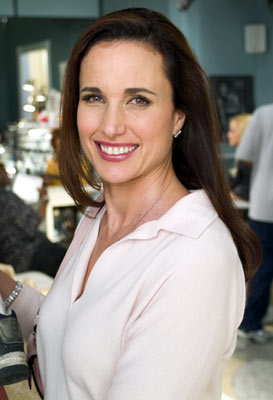 For many years the face of L'Oreal, Andie MacDowell looks well below her true age of 48 and what's more she is on record as saying she definitely doesn't believe in plastic surgery. For many years the face of L'Oreal, Andie MacDowell looks well below her true age of 48 and what's more she is on record as saying she definitely doesn't believe in plastic surgery.
Starting out as a model in her late teens, some critics say she never quite made the leap to convincing actress - in fact many describe her acting as 'wooden'. Although she may not be among the greatest actress in the world she has been among the most successful and has achieved - if that's the right word - huge celebrity status. Lucky - or clever - in her choice of parts, she has appeared in some groundbreaking and successful movies: including 'Sex, Lies and Videotape', 'Groundhog Day', and 'Four Weddings and a Funeral'.
As the representative of L'Oreal, Andie MacDowell was the first of many women to tell us that she was "worth it" - a phrase which became one of the most successful, or annoyingly smug, marketing phrases ever - depending on your point of view.
She is on record as extolling the virtues of a number of L'Oreal products that she uses as part of her everyday skin care routine. Despite being so closely identified with one skin care brand, Andie MacDowell also makes choices outside the L'Oreal range. She is a big fan of a high-end French skin care company called Caudalie (koh-da-lee) and uses several of their products.
MacDowell remains confident that older actresses have a future in Hollywood - despite some of the attitudes to aging that increasingly infuriate her. In a recent interview this summer with a top Australian paper, she is quoted as saying:
"I decided to go backward this year because people put way too much emphasis on age. I know some 30-year-olds that are older than me…you're pre-programmed to believe that a man can have wrinkles and he's sexy and a woman has wrinkles and she's old….I do this nonstop. I have to defend myself and all women that are 48, and say:Yes, we're still beautiful."
Nonetheless with her self-belief and optimism high, she has decided to take time off from film making for a little while and plans to return sometime down the road when she's ready. Currently, Andie MacDowell lives among the beautiful mountains and forests of North Carolina, and it may be that this stress free environment is at the heart of her continuing youthful appearance.
Not all of us can follow Andie MacDowell's lead and simply stop working for a while. But we can all benefit from more exercise and time spent in the great outdoors to reduce stress levels. A combination of less stress and a consistent anti-aging skin care regime can work wonders for most of us.
Although a natural beauty, Andie MacDowell's slim figure is not just down to genetics. She has had three children and is a self-admitted exercise freak. Luckily, in North Carolina there's plenty of space for her to do the horse and bike riding that she loves. She's also committed to yoga and gets her cardio exercise from running, weight lifting and frequent visits to the gym.
Something we could all copy - a great exercise routine that combines cardio exercise and core strength training with lots of variety to prevent workout boredom. Of course there is the time issue - if you can afford not to work it's much easier to make daily exercise part of your routine. But the key thing is probably enjoyment. However busy you are - if you find an activity or a combination of activities that you love doing - you'll stick to them.
So take a leaf - or several leaves - out of Andie MacDowell's book. Work out an anti-aging routine that suits you - make it part of your life and keep to it. Labels: anti-aging, celebrities, cosmetic surgery, exercise, skin care, yoga |
| posted by Maggie @ 5:59 pm |
|
|
|
Older celebrities say "no" to more plastic surgery
bookmark this at :: del.icio.us
:: Digg it
|
|
May 05, 2007 |

The argument for and against plastic surgery as an anti aging strategy is hotting up. Two of Hollywood's veteran actresses have chosen to speak out and have come down firmly in the "no" camp. According to Jane Fonda both she and Sally Field have made a "pact" not to go for any more surgery in the quest to look younger.
Fonda, 69, who has done all of the talking in the debate, says she would prefer to age gracefully and not fight the natural aging process. In an interview reported as part of a promotional drive for a new women's radio network, the actress is quoted as saying:
"I realised that I'm going to be 70 in a year, and I have chosen not to have any more plastic surgery. Sally Field and I have kind of made a pact about that."
Fonda is no stranger to cosmetic surgery famously having breast implants in her 50's. May be for her it's a question of drawing the line and finally accepting that aging is inevitable. Whatever her motivation she now says she prefers to be a positive role model for older women.
"It's really hard, especially if you're a public person. But I want to give a face to aging."
Presumably she wants that face to be mobile, human and recognizable rather than the strange stretched faces that can result from too much surgical intervention. Fonda and Field have now officially joined the line of celebrities who have publicly come out against plastic surgery.
62 year old British actress Jacqueline Bisset spoke out very strongly against plastic surgery in a recent article, saying that she thought ‘women who had cosmetic surgery looked like freaks’.
Jane Seymour takes a similar line despite admitting to having had cosmetic surgery to reduce the bags under her eyes. The 54 year old British actress has recently said she is against plastic surgery for professional reasons as much as anything, believing that the surgery takes away mobility and expressiveness in the face.
"When I see people on television and nothing is moving and their eyebrows are up near the corner of their head I think, 'How can they do this? They're destroying their expression"
Interestingly there seems to be more tolerance of plastic surgery among the younger celebrities and probably more so in the US than the UK and Europe. Despite this, several high profile young celebrities have spoken out against surgery including: Kate Winslet, Kate Beckinsale and Diane Lane.
It's good to see that the topic is now up for public debate and that celebrities are beginning to feel they have nothing to lose by talking openly. Just like the rest of us in fact! Labels: celebrities, cosmetic surgery |
| posted by Maggie @ 2:20 pm |
|
|
|
Exercise: The Ultimate Anti-Aging Weapon
bookmark this at :: del.icio.us
:: Digg it
|
|
May 04, 2007 |
Daily Exercise and Fitness
Dr. Lopez believes that one of the keys to beauty and health is created by following a sensible routine every day for exercise. The twenty-first century has ushered in an era where most people want things to happen instantly, but medical and technology advances cannot short-circuit the basic needs of the body. 
The skin is the largest organ of the body, and through exercise, not only are the muscles toned to sufficiently keep the shape of the body intact, but also body detoxification through the pores is vital for healthy skin.
Each person should choose an exercise that he likes, first and foremost. The best laid plans for exercise can immediately derail, if one does what he thinks he should do. For example, some people hate to jog - so don't kill yourself getting over this dislike, just pick something you like.
Also, every expert says it, but most people do not follow this advice, do the exercise in a gradual progression. The first two weeks are the hardest and most critical to persist through - so if you can't walk for a week due to muscle soreness, a person may give up.
 Most importantly, a person had to have a positive attitude about exercise, and find a way to decide that he does like it, or at least some aspect of it. Rather than focusing on the negative - like the pain, or difficulty, focus on positive aspects, such as delight over new muscle tone, or recognition of newfound energy. Most importantly, a person had to have a positive attitude about exercise, and find a way to decide that he does like it, or at least some aspect of it. Rather than focusing on the negative - like the pain, or difficulty, focus on positive aspects, such as delight over new muscle tone, or recognition of newfound energy.
In short, there are no quick fixes and there are no short-cuts to exercise and fitness, but moderation and persistence pay off, and turn the clock back on age and beauty!Labels: anti-aging, exercise |
| posted by Maggie @ 1:21 pm |
|
|
|
Gene clue to longevity uncovered
bookmark this at :: del.icio.us
:: Digg it
|
|
May 03, 2007 |
The mystery of how eating less boosts longevity is closer to being solved.
 Studies have shown that severe calorie restriction markedly extends lifespan in mice and many other species - but the reasons for this remained elusive. But now US research on nematode worms, published in Nature, has uncovered a gene linked to this unusual effect. In the future, the find could lead to drugs that mimic the consequences of calorie restriction but negate the need for severe fasting regimes. The study was carried out on nematode wormsSweet-spot
The life-lengthening properties of reducing calorie intake were first discovered in the 1930s, when laboratory rodents fed a severely reduced diet were found to outlive their well-fed peers. Since then, this effect has been observed on organisms as diverse as yeast, flies, worms and dogs. The consequences for humans of cutting calorie intake by about 60% while maintaining levels of vital nutrients are still unclear, although this extreme diet has a number of followers. Andrew Dillin, an author of the paper and an associate professor at the Salk Institute for Biological Studies, said: "If you reduce food too much, you go towards starvation and live less long. If you overeat you will succumb to obesity and have a short lifespan. Dietary restriction is really a sweet-spot between the two. But for 72 years, we have not known how it works."  A study using nematode worms (Caenorhabditis elegans) revealed that a gene called pha-4 played a key role. The team found worms that had their pha-4 genes removed showed no enhanced longevity while on the restricted diet. But they discovered that the opposite experiment - over-expressing levels of pha-4 in the worms - increased longevity when on the restricted diet.
The scientists say mammals have a similar gene to pha-4
"This is the first gene we have found that is absolutely essential to the longevity response to dietary restriction," explained Dr Dillin. "We finally have genetic evidence to unravel the underlying molecular programme required for increased longevity in response to calorie restriction."
Feast or famine
Although the study was carried out on worms, the finding could also be important for other species. Mammals, including humans, possessed genes that were highly similar to the pha-4 gene, explained Dr Dillin. These genes play a key role in development, and then in later life in the regulation of glucagon, a hormone that has a major role in maintaining glucose levels in blood - especially during fasting. In fact, scientists believe the life-increasing effect of dietary restriction may be linked to boosting chances of survival through times of food scarcity. "Pha-4 may be the primordial gene to help an animal overcome stressful conditions to live a long time through dietary restriction conditions," explained Dr Dillin. Scientists now plan to look at the gene in other species. Should the longevity link also apply to humans, it could open the door to the development of drugs that mimic the effects of calorie restriction while allowing people to maintain their normal diet, the scientists said. Professor Richard Miller of the Institute of Gerontology at the University of Michigan, commented: " It is really hard to guess whether the connections that we see between the pha-4 system and calorie restriction in worms will have parallels in mammals, whose repertoire of responses to various forms of long- and short-term food shortages are far more complex than those of worms. "But the Dillin paper provides both motivation to look and also clues about where to look. I think it's likely to be influential, even if the implications for mammals do eventually turn out to be a cul-de-sac - which they might or might not."
By Rebecca Morelle Science reporter, BBC News Labels: calorie restriction, gene, longevity |
| posted by Maggie @ 9:20 am |
|
|
|
Why We Age - The Cross-Linking Theory
bookmark this at :: del.icio.us
:: Digg it
|
|
May 02, 2007 |
The Cross-Linking Theory
Also referred to as the Glycosylation Theory of Aging.
In this theory it is the binding of glucose (simple sugars) to protein, a process that occurs under the presence of oxygen. Once this binding has occurred the protein becomes impaired and is unable to perform as efficiently. Known cross-linking disorders include senile cataract and the appearance of tough, leathery and yellow skin. Diabetics have 2-3 times the numbers of cross-linked proteins than healthy individual. Cross linked proteins are responsible for cardiac enlargement and the hardening of collagen, which lead to the increased susceptibility of a cardiac arrest. Cross linked proteins have also been implicated in renal disorders. Sugars binding to DNA may cause damage that leads to malformed cells and thus cancer.Labels: anti-aging |
| posted by Maggie @ 7:25 am |
|
|
|
Why We Age - The Neuroendocrine Theory
bookmark this at :: del.icio.us
:: Digg it
|
|
May 01, 2007 |
 The Neuroendocrine Theory The Neuroendocrine Theory
This neuroendocrine system is a complicated network of biochemicals that govern the release of hormones which are altered by the walnut sized gland called the hypothalamus located in the brain.
The hypothalamus controls various chain-reactions to instruct other organs and glands to release their hormones etc. The hypothalamus also responds to the body hormone levels as a guide to the overall hormonal activity.
But as we grow older the hypothalamus loses it precision regulatory ability and the receptors which uptake individual hormones become less sensitive to them. Accordingly, as we age the secretion of many hormones declines and their effectiveness (compared unit to unit) is also reduced due to the receptors down-grading.
One theory for the hypothalamus loss of regulation is that it is damaged by the hormone cortisol. Cortisol is produced from the adrenal glands. If cortisol damages the hypothalamus, then over time it becomes a vicious cycle of continued hypothalamic damage, leading to an ever increasing degree of cortisol production and thus more hypothalamic damage. This damage could then lead to hormonal imbalance as the hypothalamus loses its ability to control the system.
Labels: anti-aging |
| posted by Maggie @ 9:38 pm |
|
|
|
|
|


