Understanding Bone and Bone Health
bookmark this at :: del.icio.us
:: Digg it
|
|
December 17, 2007 |
It is important to understand that bone is not a hard and lifeless structure. It is, in fact, complex, living tissue. Our bones provide structural support for muscles, protect vital organs, and store the calcium essential for bone density and strength.
Because bones are constantly changing, they can heal and might be affected by diet and exercise. Until about age 35, you build and store bone efficiently. Then, as part of the natural aging process, your bones begin to break down faster than new bone can be formed. In women, bone loss accelerates after menopause, when the ovaries stop producing estrogen — the hormone that protects against bone loss.
Assessing your bone health
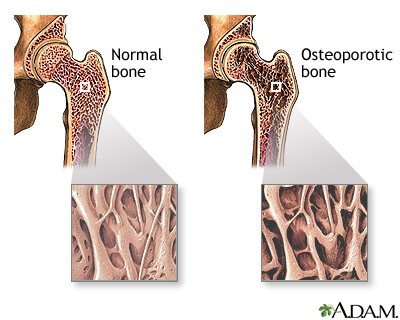
To determine if you have osteoporosis or might be at risk for the disease, your doctor will ask you a variety of questions about your lifestyle and medical history. Your doctor will want to know if anyone in your family has suffered from osteoporosis or if they have fractured bones.
Based on a comprehensive medical assessment, your doctor might recommend that you have your bone mass measured. A bone mass measurement is the only way to tell if you have osteoporosis. Specialized tests called bone density tests can measure bone density in various sites of the body. If the test is conducted at intervals of a year or more, it can detect osteoporosis before a fracture occurs, predict your chances of having a fracture in the future, determine your rate of bone loss, and/or monitor the effects of treatment.
What if I have osteoporosis?
Although there is no cure for osteoporosis, there are steps you can take to slow its progress.
Experts recommend 1,000 mg of calcium a day for women on estrogen replacement therapy and 1,500 mg of calcium daily for women not receiving estrogen therapy.
Calcium should be taken with Vitamin D (400 to 800 units per day).
Although exercise is good for someone with osteoporosis, it should not put any sudden or excessive strain on your bones. Care should be taken when lifting heavy objects, such as bags of groceries, young children, etc.
If you have osteoporosis, it's important to minimize your chances of breaking a bone. Take steps to prevent falls. As extra insurance against fractures, your health care provider can recommend specific exercises to strengthen and support your back.
Guide to osteoporosis prevention
* All women should receive counseling on their risk factors for osteoporosis. Osteoporosis is a silent risk factor for fractures, just as hypertension (high blood pressure) is for stroke.
* All post-menopausal women who suffer a fracture should be tested for osteoporosis using the bone mineral density method. This test will determine the severity of the disease.
* All post-menopausal women age 65 and older should receive a bone mineral density test regardless of additional risk factors. Women in this group should maintain an adequate intake of dietary calcium (at least 1,200 mg per day using supplements if necessary) and Vitamin D (400 to 800 IU per day).
* All people at risk for osteoporosis should perform weight-bearing exercises and muscle-strengthening exercises to reduce the risk of falls and fractures.
* Avoid tobacco and drink alcohol in moderation.
* All post-menopausal women who suffer vertebral (spine) or hip fractures should be considered as candidates for treatment of osteoporosis.
* Women with no other risk factors whose bone mineral density T-scores are below 2.0 should begin therapy to reduce the risk of fractures. Women whose bone mineral density T-scores are below 1.5 and have other risk factors should begin therapy to reduce the risk of fractures.
* Pharmacologic (medicine) treatment options for osteoporosis prevention or treatment are estrogen replacement therapy, Evista, Fosamax, Actonel and Miacalcin nasal spray.Labels: osteoporosis |
posted by Maggie @ 9:38 am   |
|
|
|
|
|


