What is osteoporosis (brittle bones)?
bookmark this at :: del.icio.us
:: Digg it
|
|
December 10, 2007 |
Osteoporosis is a debilitating disease that can be prevented and treated. Osteoporosis causes bones to become fragile and, therefore, more likely to break. If not prevented or if left untreated, osteoporosis can progress painlessly until a bone breaks. These broken bones, also known as fractures, occur typically in the hip, spine, and wrist.
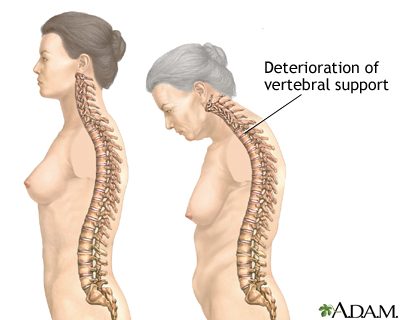
Any bone can be affected, but of special concern are fractures of the hip and spine. A hip fracture almost always requires hospitalization and major surgery. It can impair a person's ability to walk unassisted and might cause prolonged or permanent disability — or even death. Spinal or vertebral fractures also have serious consequences, including loss of height, severe back pain, and deformity.
Millions of people are at risk of developing osteoporosis. Although women are four times more likely than are men to develop the disease, men also suffer from osteoporosis.
Who is at risk for osteoporosis?
There are many factors that determine who might develop osteoporosis. The first step in prevention is to determine whether you are at risk. The risk factors include:
* Age — The older you are, the greater your risk of osteoporosis. Your bones become weaker and less dense as you age.
* Gender — Your chances of developing osteoporosis are greater if you are a woman. Women have less bone tissue and lose bone more rapidly than do men because of the changes involved in menopause.
* Race — Caucasian and Asian women are more likely to develop osteoporosis. However, African American and Hispanic women are at a significant risk for developing the disease.
* Bone structure and body weight — Small-boned and thin women are at greater risk.
* Menopause/menstrual history — Normal or early menopause (brought about naturally or because of surgery) increases your risk of developing osteoporosis. In addition, women who stop menstruating before menopause because of conditions such as anorexia or bulimia, or because of excessive physical exercise, also might lose bone tissue and develop osteoporosis.
* Lifestyle — By smoking, drinking too much alcohol, consuming an inadequate amount of calcium, or getting little or no weight-bearing exercise, you increase your chances of developing osteoporosis.
* Medicines and disease — Osteoporosis is associated with certain medicines (such as cortisone-like drugs) and is a recognized complication of a number of medical conditions, including endocrine disorders (having an overactive thyroid gland), rheumatoid arthritis, and immobilization.
* Family history — Susceptibility to fractures might be, in part, hereditary. Young women whose mothers have a history of vertebral fractures also seem to have reduced bone mass.
Summary
Osteoporosis is a condition characterized by progressive loss of bone density, thinning of bone tissue and increased vulnerability to fractures. Osteoporosis may result from disease, dietary or hormonal deficiency or advanced age. Regular exercise and vitamin and mineral supplements can reduce and even reverse loss of bone density.
Stay tuned - there'll be more tomorrowLabels: osteoporosis |
posted by Maggie @ 9:37 am   |
|
|
|
|
|


