Strength Training Exercise
bookmark this at :: del.icio.us
:: Digg it
|
|
December 24, 2007 |
Older women with coronary artery disease (CAD) may improve their quality of life and overall fitness through exercise that emphasizes strength training, according to a recent study.
Women with CAD who combined aerobic training with strength training in three sessions per week improved their upper body strength and general quality of life when compared to women who exercised using only aerobic training.
Source: Health Sciences Institute February 2008 Labels: exercise, health |
posted by Maggie @ 3:05 pm   |
|
|
|
Understanding Bone and Bone Health
bookmark this at :: del.icio.us
:: Digg it
|
|
December 17, 2007 |
It is important to understand that bone is not a hard and lifeless structure. It is, in fact, complex, living tissue. Our bones provide structural support for muscles, protect vital organs, and store the calcium essential for bone density and strength.
Because bones are constantly changing, they can heal and might be affected by diet and exercise. Until about age 35, you build and store bone efficiently. Then, as part of the natural aging process, your bones begin to break down faster than new bone can be formed. In women, bone loss accelerates after menopause, when the ovaries stop producing estrogen — the hormone that protects against bone loss.
Assessing your bone health
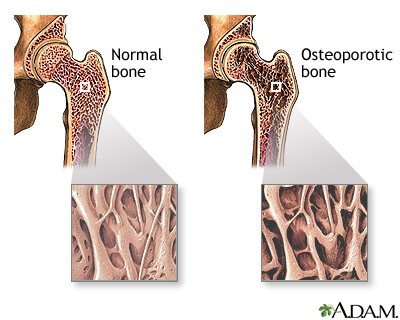
To determine if you have osteoporosis or might be at risk for the disease, your doctor will ask you a variety of questions about your lifestyle and medical history. Your doctor will want to know if anyone in your family has suffered from osteoporosis or if they have fractured bones.
Based on a comprehensive medical assessment, your doctor might recommend that you have your bone mass measured. A bone mass measurement is the only way to tell if you have osteoporosis. Specialized tests called bone density tests can measure bone density in various sites of the body. If the test is conducted at intervals of a year or more, it can detect osteoporosis before a fracture occurs, predict your chances of having a fracture in the future, determine your rate of bone loss, and/or monitor the effects of treatment.
What if I have osteoporosis?
Although there is no cure for osteoporosis, there are steps you can take to slow its progress.
Experts recommend 1,000 mg of calcium a day for women on estrogen replacement therapy and 1,500 mg of calcium daily for women not receiving estrogen therapy.
Calcium should be taken with Vitamin D (400 to 800 units per day).
Although exercise is good for someone with osteoporosis, it should not put any sudden or excessive strain on your bones. Care should be taken when lifting heavy objects, such as bags of groceries, young children, etc.
If you have osteoporosis, it's important to minimize your chances of breaking a bone. Take steps to prevent falls. As extra insurance against fractures, your health care provider can recommend specific exercises to strengthen and support your back.
Guide to osteoporosis prevention
* All women should receive counseling on their risk factors for osteoporosis. Osteoporosis is a silent risk factor for fractures, just as hypertension (high blood pressure) is for stroke.
* All post-menopausal women who suffer a fracture should be tested for osteoporosis using the bone mineral density method. This test will determine the severity of the disease.
* All post-menopausal women age 65 and older should receive a bone mineral density test regardless of additional risk factors. Women in this group should maintain an adequate intake of dietary calcium (at least 1,200 mg per day using supplements if necessary) and Vitamin D (400 to 800 IU per day).
* All people at risk for osteoporosis should perform weight-bearing exercises and muscle-strengthening exercises to reduce the risk of falls and fractures.
* Avoid tobacco and drink alcohol in moderation.
* All post-menopausal women who suffer vertebral (spine) or hip fractures should be considered as candidates for treatment of osteoporosis.
* Women with no other risk factors whose bone mineral density T-scores are below 2.0 should begin therapy to reduce the risk of fractures. Women whose bone mineral density T-scores are below 1.5 and have other risk factors should begin therapy to reduce the risk of fractures.
* Pharmacologic (medicine) treatment options for osteoporosis prevention or treatment are estrogen replacement therapy, Evista, Fosamax, Actonel and Miacalcin nasal spray.Labels: osteoporosis |
| posted by Maggie @ 9:38 am |
|
|
|
What is osteoporosis (brittle bones)?
bookmark this at :: del.icio.us
:: Digg it
|
|
December 10, 2007 |
Osteoporosis is a debilitating disease that can be prevented and treated. Osteoporosis causes bones to become fragile and, therefore, more likely to break. If not prevented or if left untreated, osteoporosis can progress painlessly until a bone breaks. These broken bones, also known as fractures, occur typically in the hip, spine, and wrist.
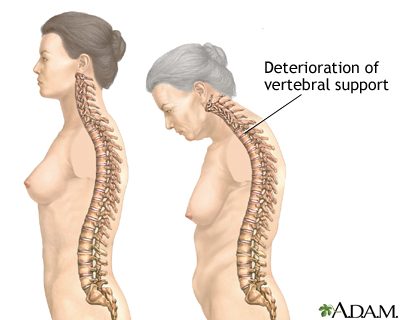
Any bone can be affected, but of special concern are fractures of the hip and spine. A hip fracture almost always requires hospitalization and major surgery. It can impair a person's ability to walk unassisted and might cause prolonged or permanent disability — or even death. Spinal or vertebral fractures also have serious consequences, including loss of height, severe back pain, and deformity.
Millions of people are at risk of developing osteoporosis. Although women are four times more likely than are men to develop the disease, men also suffer from osteoporosis.
Who is at risk for osteoporosis?
There are many factors that determine who might develop osteoporosis. The first step in prevention is to determine whether you are at risk. The risk factors include:
* Age — The older you are, the greater your risk of osteoporosis. Your bones become weaker and less dense as you age.
* Gender — Your chances of developing osteoporosis are greater if you are a woman. Women have less bone tissue and lose bone more rapidly than do men because of the changes involved in menopause.
* Race — Caucasian and Asian women are more likely to develop osteoporosis. However, African American and Hispanic women are at a significant risk for developing the disease.
* Bone structure and body weight — Small-boned and thin women are at greater risk.
* Menopause/menstrual history — Normal or early menopause (brought about naturally or because of surgery) increases your risk of developing osteoporosis. In addition, women who stop menstruating before menopause because of conditions such as anorexia or bulimia, or because of excessive physical exercise, also might lose bone tissue and develop osteoporosis.
* Lifestyle — By smoking, drinking too much alcohol, consuming an inadequate amount of calcium, or getting little or no weight-bearing exercise, you increase your chances of developing osteoporosis.
* Medicines and disease — Osteoporosis is associated with certain medicines (such as cortisone-like drugs) and is a recognized complication of a number of medical conditions, including endocrine disorders (having an overactive thyroid gland), rheumatoid arthritis, and immobilization.
* Family history — Susceptibility to fractures might be, in part, hereditary. Young women whose mothers have a history of vertebral fractures also seem to have reduced bone mass.
Summary
Osteoporosis is a condition characterized by progressive loss of bone density, thinning of bone tissue and increased vulnerability to fractures. Osteoporosis may result from disease, dietary or hormonal deficiency or advanced age. Regular exercise and vitamin and mineral supplements can reduce and even reverse loss of bone density.
Stay tuned - there'll be more tomorrowLabels: osteoporosis |
| posted by Maggie @ 9:37 am |
|
|
|
What causes osteoporosis?
bookmark this at :: del.icio.us
:: Digg it
|
|
December 03, 2007 |
Aging is one of the main risk factors for osteoporosis and osteoporotic fractures. If you are lucky enough to live a long life, you are much more likely to develop weakened bones from osteoporosis. In women, the loss of estrogen in menopause causes bone loss of up to two percent per year. White women over age 50 have a lifetime risk of fracture of about 75 percent. A number of factors contribute to osteoporosis:  * advanced age * female gender * low body weight or a thin and slender build * recent weight loss * history of fractures * family history of fractures * tobacco use * alcohol abuse * lack of exercise * extended use of certain medications (e.g., corticosteroids, anticonvulsants, and thyroid medicine) * Asian or Caucasian race These risk factors are just as important as a measurement of low bone mass in determining how likely you are to have a fracture. People with low bone mass but no additional risk factors often don't develop fractures. People with small amounts of bone loss but many risk factors are more likely to eventually develop fractures. Labels: anti-aging, osteoporosis |
| posted by Maggie @ 8:52 pm |
|
|
|
|
|


